
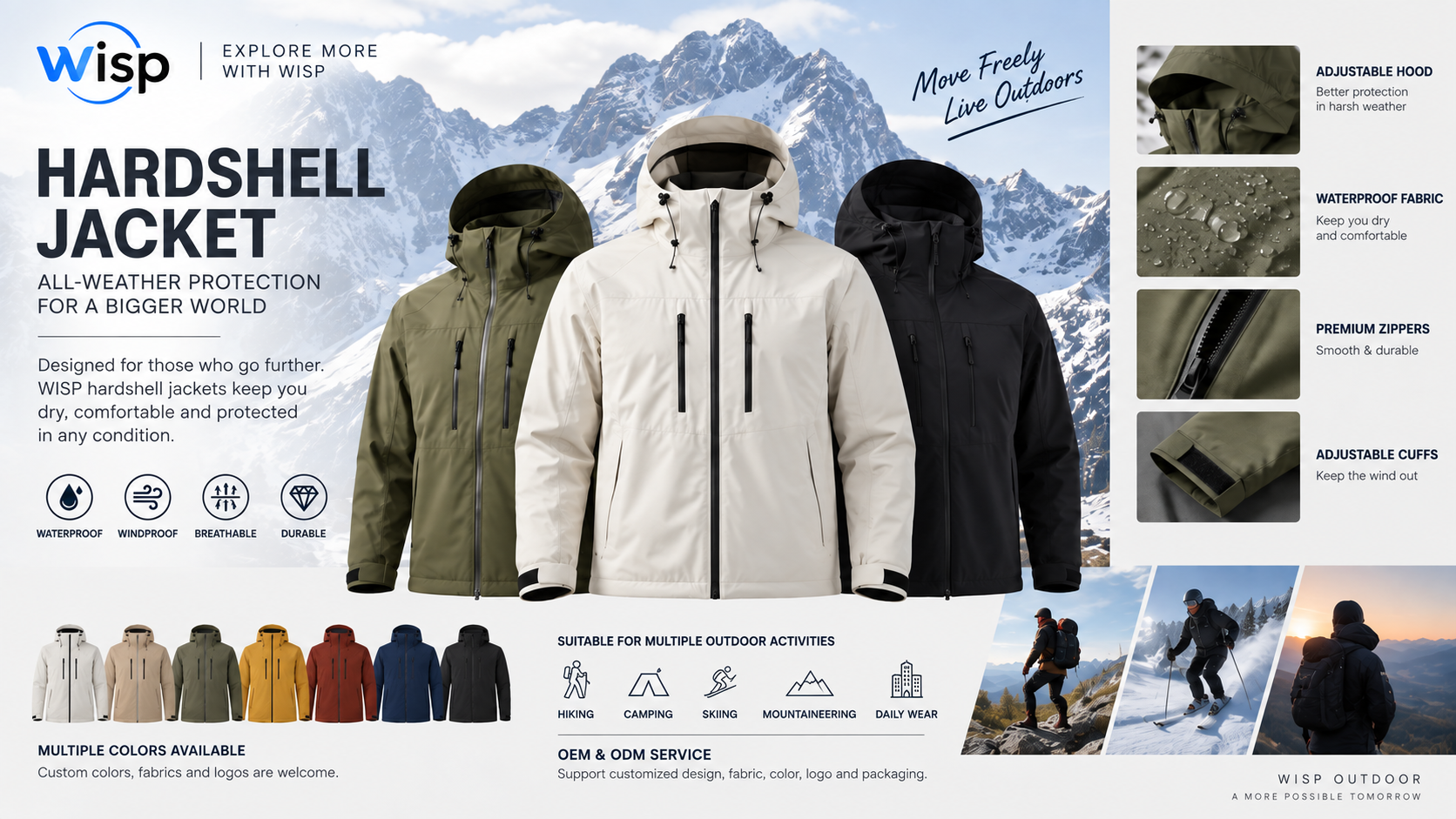
Hardshell vs softshell is one of the most common questions in technical jacket development. The answer is not that one is better than the other. Each construction solves a different problem. A hardshell jacket is usually selected when weather protection is the primary requirement. A softshell jacket is usually selected when mobility, comfort and moderate protection are more important than maximum waterproof performance.
For European and North American buyers, the decision should be based on end use, target retail price, climate, layering system and the customer's expectation of performance. A brand collection may need both. A uniform program may choose softshell for daily comfort and hardshell for wet-weather roles. An importer may need simplified platforms that are easier to replenish across several channels.
How hardshell jackets work
A hardshell jacket is built around a protective outer fabric system. Depending on the specification, the shell may use a coating or membrane, a water-repellent face fabric, seam sealing and protective zipper choices. The purpose is to block wind and rain while allowing some level of moisture vapor transmission from the inside.
The main development questions are fabric weight, waterproof rating target, breathability target, seam construction, hood structure, pocket placement, zipper type and lining choice. A fully featured hardshell may be suitable for mountain use, while a lighter shell may serve travel, commuting or promotional outdoor ranges. The buyer should avoid over-specifying performance that the customer does not need, because each technical feature can affect cost and lead time.
How softshell jackets work
A softshell jacket focuses on comfort, stretch and breathability. Many softshell fabrics combine a smooth outer face, a stretch structure and a brushed or bonded inner surface. Some versions include membrane layers for higher wind resistance or light water resistance, while others prioritize flexibility and air permeability.
Softshells are useful when the wearer is active and needs freedom of movement. They often feel less stiff than hardshells and can be worn for longer periods in changing conditions. The trade-off is that a softshell normally does not replace a true rain shell in sustained wet weather. For OEM sourcing, the buyer should define whether the product is an active layer, a workwear piece, a uniform jacket or an outdoor lifestyle item.
Core technical comparison
| Parameter | Hardshell | Softshell |
|---|---|---|
| Waterproof protection | Higher potential with membrane, coating and seam sealing | Usually light rain or water-resistant protection |
| Breathability | Depends on membrane and venting design | Often stronger for active comfort |
| Stretch | Possible but not always central | Usually a key benefit |
| Weight | Ranges from ultralight to expedition weight | Often medium weight with comfortable hand feel |
| Best use | Rain, wind, alpine, travel and wet-weather protection | Movement, work, hiking, daily outdoor and uniform wear |
This table should be used as a starting point, not a fixed rule. Fabric engineering can blur the line between categories, and buyer requirements often create hybrid directions.
Choosing by use scenario
Choose a hardshell when the customer expects clear weather protection, especially for rain, wind or unpredictable outdoor conditions. Typical features include adjustable hood construction, storm flaps or water-resistant zippers, sealed seams, protective cuffs and hem adjustment. The product story can focus on protection, packability, reliability and technical construction.
Choose a softshell when comfort and movement are the selling points. A softshell can be excellent for staff jackets, active outdoor programs, travel ranges and everyday technical apparel. Buyers often select softshells because they look clean, feel comfortable and work across broad wearing occasions. The product story can focus on stretch, breathability, warmth balance and practical durability.
OEM sourcing advice
Before asking for prices, define the use case and the minimum performance requirement. If you ask several suppliers for “a waterproof jacket” without fabric target, seam sealing expectation, zipper direction and testing needs, you will receive quotations that are difficult to compare. The same is true for softshells: stretch percentage, fabric weight, backing, membrane choice and finish can change cost and feel.
Buyers should also think about collection architecture. A hardshell may be the protective outer layer, while a softshell may serve as the active mid-range product. If the brand sells both, keep the difference clear in copy, design and specification. That helps sales teams explain the value and prevents customers from expecting one product to do everything.
When a hardshell makes the most sense
A hardshell is the safer choice when the buyer needs a clear protection message. That usually means wet-weather retail, alpine-inspired outdoor ranges, travel jackets, cycling or commuting programs, and any collection that must communicate dependable rain and wind resistance. The customer may not need expedition-level performance, but they do need visible weather protection and a jacket that feels purpose-built rather than soft and casual.
In product development, the hardshell is also useful when the brand wants a more technical look. Sharp seam lines, functional hoods, storm details and clean pocket architecture can make the product feel more engineered. For some buyers, that visual language is part of the market position, especially when selling to outdoor specialty stores or technical retail channels in Europe and North America.
Where possible, keep the message simple. One good protection promise is more effective than five vague claims. If the product is meant to be waterproof, make sure the fabric, construction and use case all support that promise. That clarity helps sales teams and reduces after-sales confusion.
When a softshell is the better commercial choice
A softshell works well when the end user will wear the jacket for movement, work or long periods across changing conditions. Buyers often choose this category for staff apparel, business casual outdoor programs, hiking collections and travel ranges. The softer hand feel makes the garment easier to wear all day, and the stretch structure often improves the perceived value for customers who care about comfort.
Softshells are also easier to position when the weather expectation is moderate rather than extreme. Instead of promising the strongest waterproof barrier, the product can focus on comfort, layering, wind moderation and practical everyday use. This makes the category especially attractive for importers and wholesalers who need a reliable platform that is easier to explain across multiple channels.
The commercial advantage is flexibility. A softshell can be built as a clean mid-layer, a corporate jacket, a travel item or an outdoor lifestyle piece. If the buyer wants fewer style complications and a smoother wear experience, softshell often creates a better balance between manufacturing complexity and market appeal.
How to brief an OEM supplier
The best technical brief starts with the wearer. Describe who will wear the jacket, where it will be used and what the jacket must do in the real world. Then define the price band, expected quantity, preferred retail position and any non-negotiable performance needs. A supplier can make much better recommendations when the product goal is written in plain language rather than just listed as a style code.
If you already have a garment reference, explain what should stay and what should change. A buyer may want the fit of one style, the hood of another and the pocket layout of a third. Those decisions are normal in OEM work, but they need to be organized before sampling begins so the factory knows which features matter most.
For European and North American buyers, the right supplier is usually the one that can explain trade-offs clearly. If a construction choice raises cost, affects lead time or changes waterproof performance, you want to hear that early. That is how the buyer protects margin and how the factory avoids surprise revisions later in the program.
Useful Wisp Outdoor product links
Review Alpine Hardshell Jacket, Storm Hardshell Jacket and Graphite Softshell Jacket examples to compare product directions. For a broader view, visit the technical outerwear products page or contact Wisp Outdoor with your target market, quantity and feature requirements.