
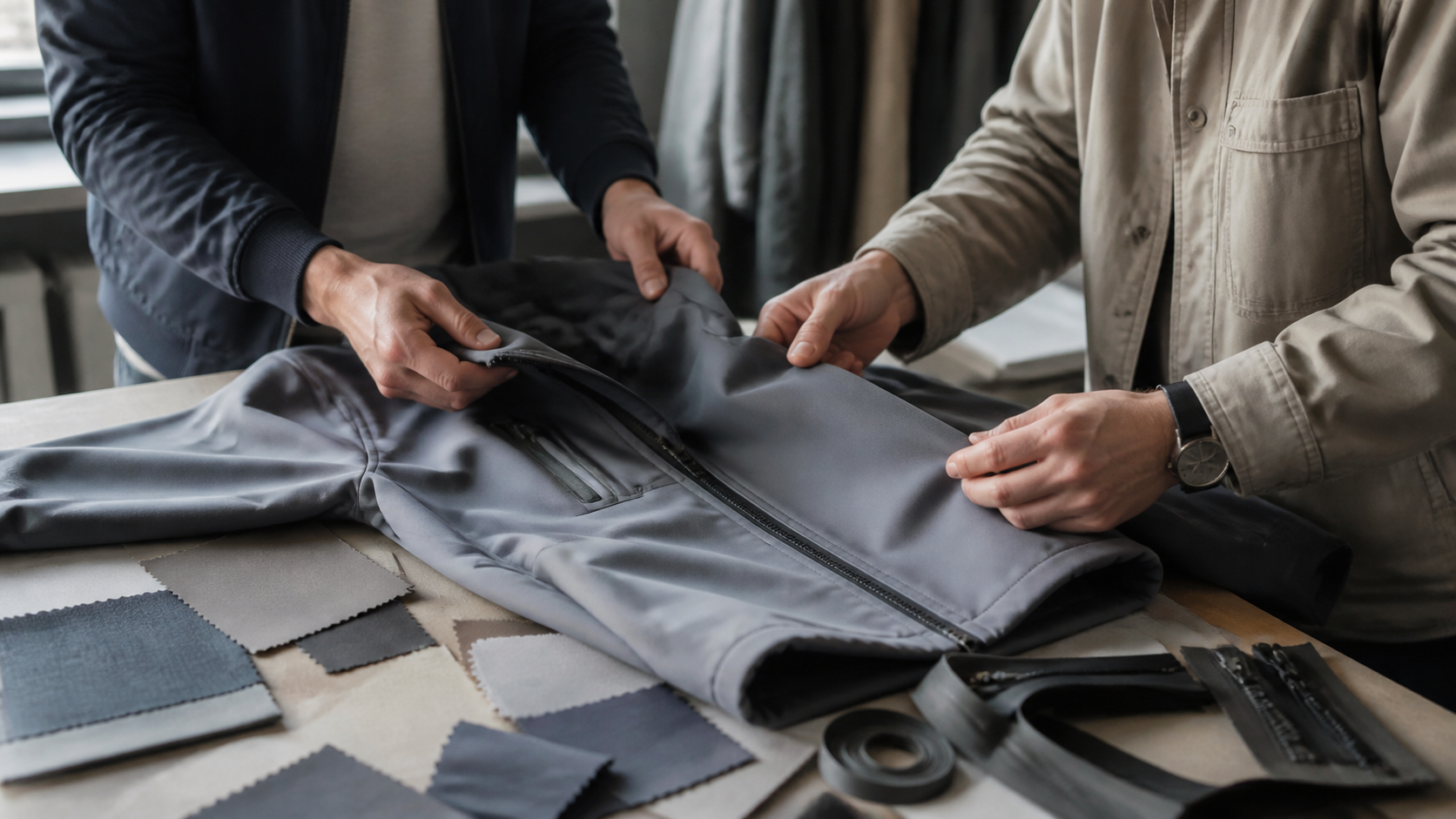
Choosing a jacket manufacturer in China is not simply a price exercise. For buyers in Europe and North America, the supplier must translate a commercial idea into fabric choices, fit decisions, sample approvals, bulk production controls and shipment-ready documentation. A good factory protects your brand promise; a poor match can create delayed samples, inconsistent sizing, weak seam workmanship and expensive rework at the end of the season.
China remains one of the strongest sourcing bases for technical jackets because it combines fabric access, trim ecosystems, skilled sewing capacity and export experience. The advantage is especially clear when a buyer needs waterproof shells, softshell jackets, insulated programs or 3-in-1 systems that involve multiple materials and construction choices. The challenge is that not every factory is built for the same product. A fashion woven factory, a down garment specialist and an outdoor shell factory may all say they make jackets, but their strengths are different.
Why many buyers still choose China for jacket manufacturing
China's outerwear supply chain is mature. Fabric mills, zipper suppliers, tape suppliers, label makers, packaging vendors and testing resources are usually close enough to support faster development decisions. For a technical jacket program, this matters because one design decision often affects several downstream details. A change in membrane, lining, zipper gauge or seam tape may affect cost, lead time, testing, bulk handling and final care instructions.
Experienced Chinese jacket manufacturers also understand export expectations. European and North American buyers usually need clear sampling records, size grading, packing instructions, carton marks, compliance documents and transparent communication. When the supplier already works with international programs, the buyer spends less time explaining the basics and more time improving the product.
Seven factory indicators to evaluate
1. Real production capacity. Ask how many jacket lines the factory operates, what product types those lines usually make and how capacity changes during peak season. Capacity should match your order size without forcing the factory to outsource critical steps without your approval.
2. Category experience. Look for evidence that the factory has produced the product family you need. A hardshell jacket requires different handling than a basic padded jacket. Softshell fabric behaves differently from woven shell fabric. A 3-in-1 jacket requires liner compatibility and attachment control.
3. Certification and compliance readiness. Certifications are useful, but they should be relevant to your channel. Ask about audit history, material testing support, restricted substance control and documentation discipline. If your customer requires a specific standard, confirm whether the factory can support it before sampling.
4. Sampling process. Strong suppliers do not treat samples as casual prototypes. They record fabric references, trim choices, measurements, workmanship comments and buyer approvals. Each sample should move the product closer to bulk readiness.
5. Quality control system. Ask how the factory checks incoming materials, pre-production samples, inline workmanship, measurements, packing and final inspection. The best answer is practical and specific, not a vague promise that quality is important.
6. Communication quality. Technical jacket programs require many small decisions. A reliable supplier explains trade-offs early, asks clear questions and confirms changes in writing. Slow or unclear communication during sampling usually becomes a larger problem during bulk production.
7. Logistics and export coordination. The factory should understand carton packing, shipping marks, documentation timing and delivery windows. This is especially important for seasonal outerwear, where late goods can miss the selling period.
Common sourcing traps
The first trap is comparing quotations without comparing specifications. Two jackets may look similar in a photo, but membrane type, zipper quality, seam sealing, lining, insulation, pocket construction and packing method can create very different costs. Ask every supplier to quote against the same reference and list assumptions clearly.
The second trap is approving a good-looking sample without checking production repeatability. A sample can be made carefully by one technician, while bulk production depends on line training, material consistency and inspection discipline. Before confirming an order, ask how the factory will translate sample details into production standards.
The third trap is ignoring communication risk. If a supplier avoids difficult questions, gives only general answers or changes details without written confirmation, the buyer carries hidden risk. For B2B jacket programs, documentation is part of quality control.
Factory visit checklist
- Review the sample room and ask which products were developed recently.
- Walk the sewing lines and confirm whether similar jackets are in production.
- Check fabric and trim storage for organization, labeling and separation.
- Ask to see measurement records, inspection forms and approved samples.
- Review packing areas, carton handling and finished-goods storage.
- Meet the merchandiser or product contact who will manage your program.
- Discuss one real style and ask what risks they see before quoting.
A visit should help you understand how the factory thinks. Equipment and size matter, but the most useful signal is whether the team can discuss your product clearly and practically.
Turn the visit into a documented supplier decision
After the visit, score every factory against the same written criteria instead of relying on the strongest presentation. Record the production lines observed, similar styles reviewed, sample-room capability, material controls, inspection records, communication response and any process that may be subcontracted. Separate confirmed evidence from promises that still need verification. Then issue a short follow-up list with owners and deadlines for open questions.
A controlled pilot order can provide the final proof. Keep the first style commercially realistic, but define measurements, workmanship, labeling, packing and inspection expectations as carefully as you would for a larger program. Review how the supplier manages changes, material approvals and corrective action. The result gives you a practical record of performance before volume or style complexity increases.
How Wisp Outdoor approaches supplier partnership
Wisp Outdoor works as a technical outerwear manufacturing partner for buyers who need OEM and ODM jacket support. Our process starts with the brief, reference sample or tech pack, then moves into fabric direction, construction review, sampling, specification confirmation and controlled bulk production. We focus on hardshell jackets, softshell jackets, windbreakers, insulated jackets, 3-in-1 systems and related outdoor apparel.
If you are comparing suppliers, start with a clear product target: who will wear the jacket, which market it serves, what weather protection it needs, what quantity range you expect and what cost level is realistic. Then evaluate factories against the same brief. That discipline makes quotations more meaningful and helps you choose a partner who can support the program after the first sample.
Internal resources for your next step
To understand how a development project moves forward, review our OEM & ODM process. If you want to evaluate factory background, visit Why Wisp. Product directions are available on the technical outerwear products page, including OEM hardshell jacket options. When you are ready, share your brief through the request a quote form.
FAQ
What is the most important factor when choosing a jacket manufacturer in China?
The most important factor is fit between your product requirements and the factory's real production capability. Capacity matters, but category experience, sample discipline, fabric sourcing and communication quality are usually better predictors of a successful OEM jacket program.
Should buyers choose the lowest quotation?
No. A very low quotation often means materials, workmanship details, inspection time or packing standards are being underestimated. Buyers should compare the full specification, not only the unit price.
Can a factory help if my tech pack is incomplete?
Yes, a product-focused supplier can begin with reference samples, images, target market, quantity and target cost. The key is to document decisions clearly before sampling and bulk production.