The OEM outerwear production process turns a commercial idea into a controlled product. For technical jackets, the process is more complex than simply cutting fabric and sewing panels. A hardshell may involve membrane choices, seam sealing and hood adjustment. A softshell may require stretch recovery and bonded fabric evaluation. A 3-in-1 jacket must control shell, liner and attachment compatibility. Each decision affects cost, lead time and repeatability.
For buyers in Europe and North America, a clear process reduces uncertainty. It helps the buyer understand what information is needed, when decisions should be made and how the approved sample becomes the reference for bulk production. The following framework explains how Wisp Outdoor thinks about design-to-delivery jacket programs.
1. Requirement definition
The process starts with a product brief. A complete tech pack is helpful, but it is not always required at the first conversation. Useful information includes product type, target market, intended use, reference images or samples, quantity estimate, size range, target price, delivery window and any required compliance or testing standards.
At this stage, the factory should ask questions rather than rush to quote. The goal is to identify the product category, performance expectation, design complexity and commercial constraints. A buyer requesting a premium waterproof shell needs a different path from a buyer sourcing a simple windbreaker for a promotional program. Good definition prevents wasted sampling rounds later.
2. Fabric and trim engineering
Outerwear performance begins with materials. Fabric selection may include woven shell fabrics, stretch softshells, insulation, linings, membranes, coatings, seam tape, zippers, drawcords, snaps, labels and packaging components. The sourcing route depends on the buyer's cost target, performance claims and timeline.
This stage should also review risk. If a material has a long lead time, high minimum, color limitation or uncertain test result, the buyer should know early. Fabric engineering is not only about choosing the “best” material; it is about choosing a material that supports the intended use, target price and production reality.
3. Sampling and approval
Sampling converts decisions into a physical garment. The first sample may focus on silhouette, construction and feature placement. Later samples may refine measurements, fit, fabric hand feel, branding, pocket layout and production details. Each sample should produce written comments and a clear next action.
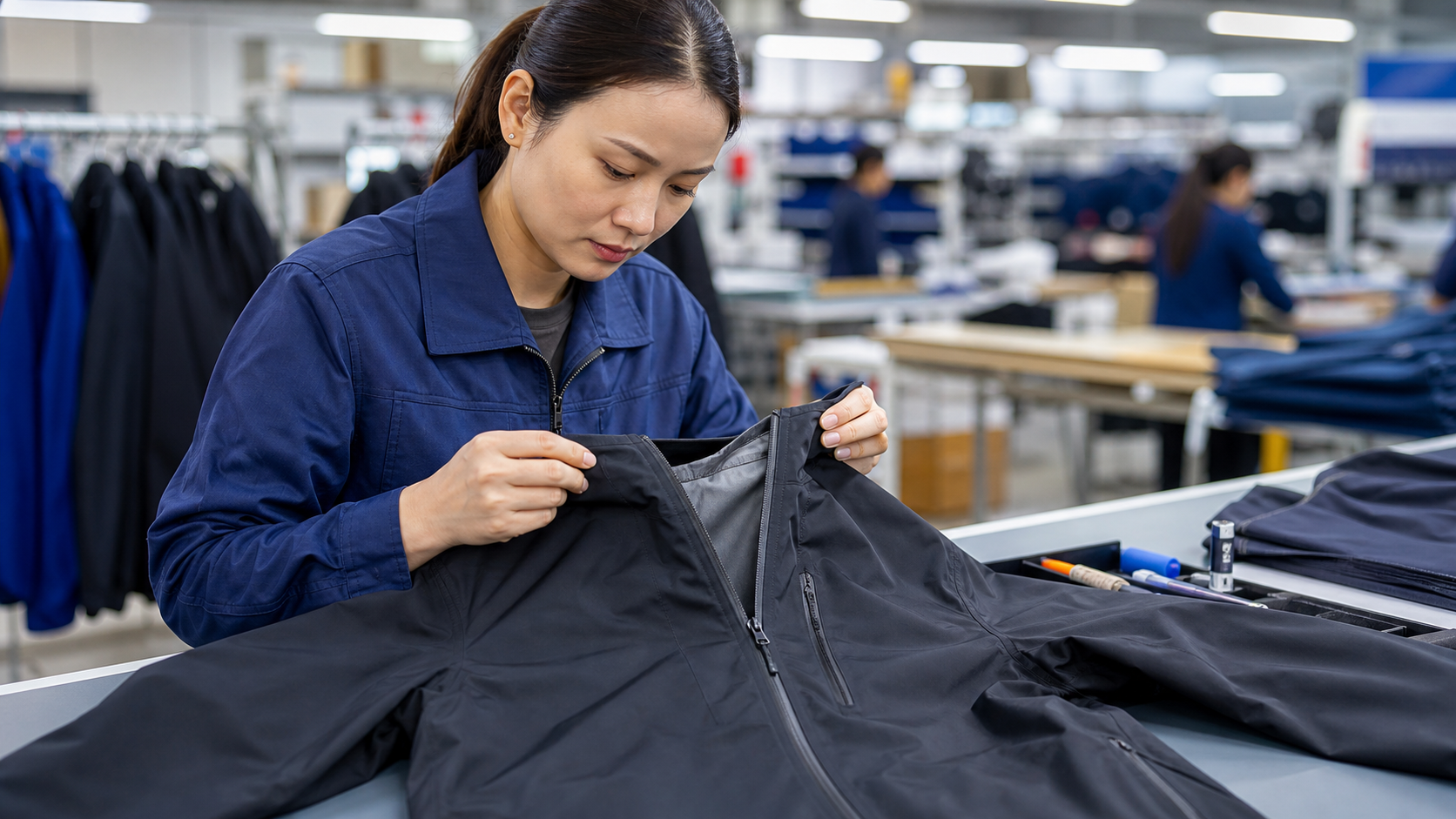
For technical jackets, sample review should include more than appearance. Buyers should check hood function, zipper operation, pocket access, sleeve movement, hem adjustment, layering space, measurement tolerance and workmanship. If the product will make performance claims, testing requirements should be discussed before bulk production is confirmed.
4. Bulk production preparation
Once the sample is approved, the factory prepares for bulk. This includes confirming the bill of materials, size chart, color standards, trim approvals, packing method, label placement and inspection criteria. A pre-production sample or sealed approval sample becomes the reference for the production line.
Production preparation is where many hidden problems can be prevented. The team should confirm material arrival, cutting instructions, sewing methods, seam sealing requirements, label details and any special packing rules. If workers need training for a new construction detail, that should happen before the line starts at full speed.
5. Quality control and shipment
Quality control works best when it is built into the process. Incoming material checks help prevent fabric and trim issues. Inline inspection catches workmanship problems earlier. Measurement checks confirm size consistency. Final inspection reviews appearance, construction, packing, carton marks and order quantity before release.
For export buyers, shipment coordination includes documentation, packing list, carton dimensions, booking support and delivery timing. Outerwear is seasonal, so the factory and buyer should communicate clearly about production progress and shipment readiness.
Reference timeline
| Stage | Typical focus | Buyer output |
|---|---|---|
| Brief review | Product type, target market, quantity and target cost | Reference sample, image or tech pack |
| Material direction | Fabric, trims, lining, insulation and color options | Material approval direction |
| Sampling | Fit, construction, features and workmanship | Comments and approval decisions |
| Bulk production | Cutting, sewing, seam work, packing and inline checks | Confirmed order and shipping plan |
| Final release | Final inspection and shipment documentation | Delivery confirmation |
How to start a smoother program
The best way to shorten development time is to share a focused brief at the beginning. Tell the supplier what the jacket must do, where it will sell, what quantity range you expect and what cost level is realistic. If you have a reference sample, explain what should be kept and what should be changed. If you only have an idea, describe the end user and the weather conditions.
What buyers should prepare before sampling
A smoother process begins with better inputs. Buyers should prepare the target market, product purpose, quantity range, price target, reference imagery, size range, color direction and any compliance or testing requirements. If the program is for Europe or North America, it helps to describe where the product will be sold and what level of performance the customer expects.
That information gives the supplier enough context to recommend the right materials and avoid over-engineering the style. A simple travel shell and a technical alpine jacket should not follow the same development path. The more clearly the use case is defined, the easier it becomes to select fabrics, trims and construction details that match the business model.
It also helps the buyer make faster decisions later. If fit, target price and market position are established early, the sample process can focus on refinement instead of guessing the direction. That is often the biggest difference between a controlled OEM program and one that keeps drifting from round to round.
Where production programs usually slow down
The most common delay is incomplete approval. A buyer may approve the look of the sample but forget to confirm the measurement tolerance or color standard. Another delay appears when trim choices keep changing after material sourcing has already started. Technical outerwear has many connected components, so one small change can affect several production steps at once.
Communication timing also matters. If a clarification sits unanswered for several days, the calendar may shift even though the work itself is simple. Clear ownership on both sides of the project is the easiest way to reduce this risk. One buyer contact and one factory contact can keep the order moving in a straight line.
Planning for export deadlines
European and North American buyers usually work against a selling season, not just a ship date. That means the project should be planned backward from the market window. Sampling, approvals, fabric confirmation, bulk production, inspection and shipment all need enough buffer to avoid missing the launch period.
For that reason, jacket programs should not be managed like generic replenishment orders. They need a little more structure at the start, but that structure pays back later through fewer revisions, clearer documentation and more dependable bulk output.
Maintain one approval record from sample to shipment
Every approved change should flow into one controlled specification: measurements, bill of materials, color references, trim details, artwork placement, workmanship notes and packing instructions. The sealed sample and written record must agree before bulk cutting begins. Version dates and named approvers make later questions easier to resolve. During production, inspection findings should reference that same standard, so corrective action is based on evidence instead of memory. This simple document trail protects the schedule and makes repeat orders more consistent.
Learn more about Wisp Outdoor's OEM & ODM jacket development process, explore our technical outerwear products or send a brief through the request a quote form. A clear first conversation is often the difference between a slow project and a controlled production program.