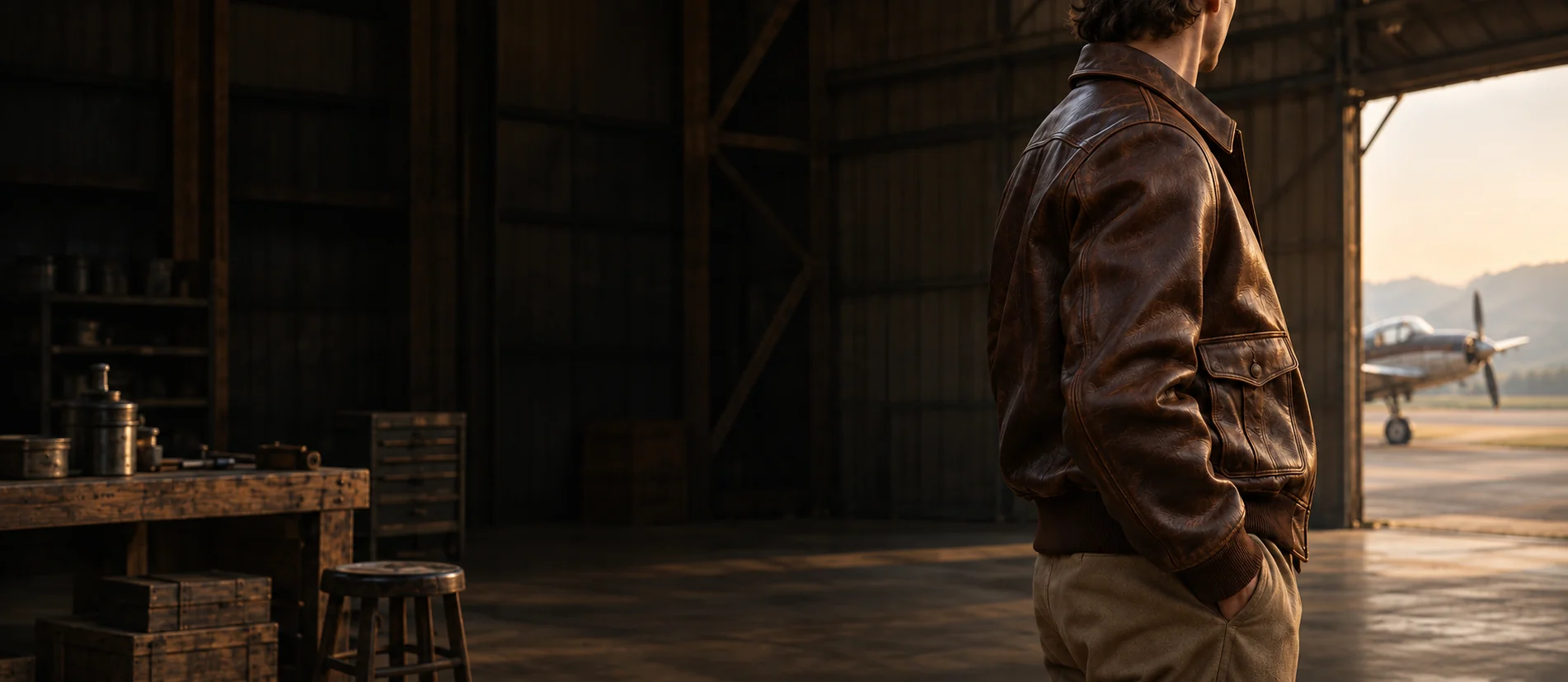

From mid-century supersonic cockpits to modern luxury runways and global corporate activations, few garments match the architectural versatility of the custom bomber jacket. Driven by surging demand for individualized fashion and branded teamwear, the global decorated apparel market is projected by Grand View Research to expand from USD $28.9 billion to USD $68.2 billion by 2030 at a 13.0% compound annual growth rate (CAGR)—with custom outerwear leading high-value unit growth within the USD $359.8 billion global winter wear sector.
Yet most off-the-rack and print-on-demand jackets cut corners where it matters most: thin polyester shells that pill after a season, hydrophobic linings that trap sweat, generic boxy grading, and low-density embroidery that puckers at the seams.
At Wisp Outdoor, we engineer custom bomber jackets from raw hide and mill-dyed yardage—never pre-sewn blanks. Our manufacturing benchmarks weren't learned from fast-fashion lookbooks; they were forged alongside exacting heritage partners, including a storied American heartland aviation outfitter founded in the mid-1980s by a decorated combat veteran supplying active-duty Army, Navy, and Coast Guard crews. Whether you are developing a made-to-measure leather bomber jacket for a collection or sourcing 500 custom embroidered bomber jackets for an international company summit, this guide breaks down the textile science, archival military specifications, decoration engineering, and bespoke workflow behind a lifetime-grade flight jacket.
The Science & ROI Behind Custom Bomber Jackets: Why Bespoke Beats Off-the-Rack
- Online apparel return rate
- 24.4%
- Returns caused by size and fit
- 53%
- Lifetime brand impressions per garment
- 9,000
Investing in a personalized bomber jacket delivers measurable returns—both psychologically for individual wearers and financially for corporate brands:
1. Solving the Sizing Crisis with Made-to-Measure Precision
Standardized retail alpha sizing (S / M / L / XL) fails a vast majority of body proportions. Retail analytics from Coresight Research reveal that online apparel suffers an average 24.4% return rate, with 53% of returns caused directly by poor size and fit—a figure McKinsey & Company places as high as 70% when style and drape mismatches are included. Furthermore, Narvar consumer studies show 58% to 63% of shoppers resort to "bracketing" (buying multiple sizes just to return what doesn't fit). Our program eliminates sizing guesswork entirely with inclusive graded blocks (XXS to 4XL) plus true made-to-measure (MTM) pattern drafting tailored to your exact shoulder slope, chest, torso, and sleeve length.
2. The "I Designed It Myself" Effect & Garment Longevity
Peer-reviewed research by Nikolaus Franke, Martin Schreier, and Ulrike Kaiser published in Management Science ("The 'I Designed It Myself' Effect in Mass Customization", 2010) demonstrated across five empirical studies that participating in a garment’s design generates substantial independent perceived value and pride of ownership beyond physical fit alone. Complementing this, sustainable design researchers Ruth Mugge, Jan Schoormans, and Hendrik Schifferstein (Journal of Engineering Design, 2009) proved that personalized co-design fosters deep emotional bonding with apparel—significantly delaying premature disposal and extending active wardrobe lifespan compared to fast-fashion outerwear.
3. Unmatched B2B Brand Impressions (9,000 Views Per Jacket)
For companies, startups, and event organizers ordering custom bomber jackets with logo branding, outerwear is the highest-performing tangible asset in marketing. According to the Advertising Specialty Institute (ASI) Ad Impressions Study:
- #1 in Visibility: Custom outerwear generates an average of 9,000 lifetime brand impressions per garment—ranking first across all promotional product categories.
- Sub- Penny CPI: Even a premium custom jacket delivers a cost-per-impression (CPI) as low as $0.004 to $0.01, outperforming transient digital ad clicks.
- Multi-Year Retention: 87% of recipients keep a branded jacket for more than one year, 78% wear it at least once a week during cooler months, and 85% report a stronger propensity to do business with the issuing brand.
Iconic Bomber Silhouettes Rooted in Aviation Specifications
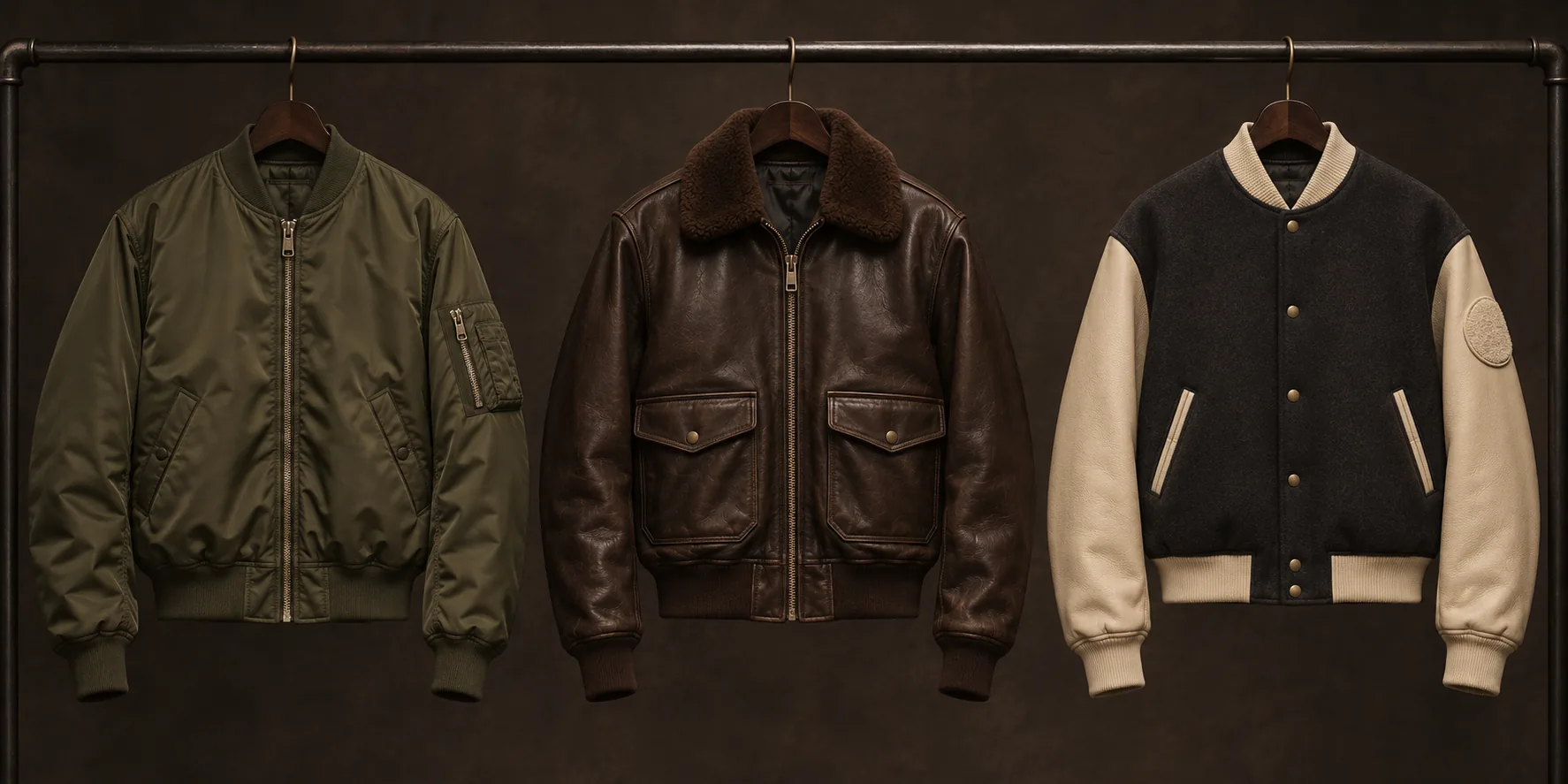
In apparel engineering, Jane M. Lamb and M. Jo Kallal’s foundational FEA Consumer Needs Model (Clothing and Textiles Research Journal, 1992) states that enduring outerwear must harmonize Functional protection, Expressive identity, and Aesthetic proportion. Every custom bomber jacket we craft builds upon three battle-tested silhouettes:
1. The MA-1 Flight Bomber (Archival Spec: MIL-J-8279)
Standardized by the U.S. Air Force in the early 1950s under military specification MIL-J-8279 (evolving through revisions A to F), the MA-1 replaced bulky shearling jackets as jet cockpits grew more compact. Engineered for the Intermediate Weather Zone (-10°C to +10°C / 14°F to 50°F), the classic MA-1 features a sleek low-profile rib-knit blade collar (originally designed to avoid interfering with parachute harnesses and helmets), angled snap-welt handwarmer pockets, a zippered left-sleeve utility/pen pocket, and—introduced in revision MIL-J-8279D—a reversible high-visibility contrast lining. Today, it is our most requested block for custom nylon bomber jackets, satin builds, and minimalist nappa leather pieces.
2. The G-1 & A-2 Heritage Leather Aviator (MIL-J-7823 & Spec 94-3040)
First standardized for U.S. Naval and Marine Corps aviators in 1951 under MIL-J-7823 (succeeding the WWII M-422A), the G-1 bomber pairs supple chrome-tanned goatskin with a detachable or fixed Mouton shearling collar and an ergonomic bi-swing action back with underarm gussets—allowing full arm extension without lifting the waist hem. Its cousin, the U.S. Army Air Corps A-2 flight jacket (Drawing No. 30-1415), swaps the fur collar for a crisp snap-down shirt collar and one-piece back panel, providing an unbroken canvas for painted artwork or embossed leather patches.
3. The Modern Streetwear & Varsity-Hybrid Bomber
Tailored with a relaxed, slightly cropped boxy drape and dropped shoulders, this contemporary cut fuses classic bomber waist ribbing with contrast leather or twill sleeves, snap-button storm plackets over two-way zippers, and heavy chenille patches—ideal for independent fashion labels, touring artists, collegiate clubs, and esports organizations.
Exterior Shell Materials: Textile & Leather Engineering Comparison
Selecting the right outer shell dictates abrasion durability, weather protection, drape, and compatible logo application methods. Unlike basic merch suppliers who rely on generic 190T polyester, we evaluate hides and woven shells against international mechanical testing benchmarks—including ISO 3376 (leather tensile strength), ISO 3377-2 (double-edge tear load), ISO 11640 (rub colorfastness), and ISO 12947 (Martindale abrasion resistance).
Scroll sideways to compare all columns.
| Exterior Shell Material | Thickness / Weight (GSM) | Mechanical & Lab Benchmark | Ideal Climate & Temp | Best Customization & Use Cases |
|---|---|---|---|---|
| Full-Grain Lambskin Leather | 0.7 – 0.9 mm (1.8 – 2.2 oz) |
Fine collagen grain; buttery luxury drape with smooth surface finish | Mild Fall to Cool Spring (5°C – 18°C) |
1-of-1 bespoke fashion bombers, tonal embroidery, executive gifts |
| Full-Grain Goatskin Leather (G-1 Spec) | 0.9 – 1.1 mm (2.2 – 2.6 oz) |
Tight, lanolin-rich interlocking fibers; superior tear-to-weight ratio (ISO 3377) & natural pebble water resistance | Intermediate Cold (-5°C – 15°C) |
Heritage G-1/A-2 aviator builds, velcro/stitched flight patches, lifetime wear |
| Heavyweight Cowhide / Steerhide | 1.1 – 1.3+ mm (2.8 – 3.5 oz) |
Highest tensile strength (8 – 25 N/mm² per ISO 3376); maximum abrasion resistance |
Cold / High-Wind Riding (-10°C – 12°C) |
Rugged moto-bombers, debossed leather emblems, heirloom outerwear |
| Genuine Calf & Goat Suede | 0.8 – 1.0 mm |
Velvety sanded nap; tested to ISO 11640 dry/wet rub fastness standards | Dry Transitional Weather (8°C – 20°C) |
Quiet-luxury silhouettes, custom printed interior linings, smart-casual teams |
| High-Tenacity Flight Nylon 6,6 Twill | 210 – 260 GSM (6.2 – 7.7 oz/yd²) |
High polymer crystallinity; 30,000 – 50,000+ Martindale cycles (ISO 12947) + PFC-free DWR water repellency |
All-Season Rain & Wind (-10°C – 15°C w/ fill) |
Custom bomber jackets wholesale, tech startups, streetwear drops, MA-1 builds |
| Heavy Bridal / Flight Satin | 180 – 240 GSM |
High-luster satin weave; snag-resistant high-filament yarn construction | Spring / Summer / Indoor Stage (12°C – 24°C) |
Tour & festival merch, dance crews, VIP event jackets, metallic embroidery |
Melton Wool (80/20 Blend) |
450 – 620 GSM (13 – 18 oz/yd²) |
Felted dense weave; natural wind resistance and high thermal retention | Deep Winter (-15°C – 8°C) |
Collegiate varsity-bomber hybrids, chenille appliqués, leather-sleeve builds |
| Organic Cotton Bull Denim & Canvas | 320 – 420 GSM (9.5 – 12.5 oz) |
Breathable cellulosic structure; enzyme-washed for zero post-delivery shrinkage | Spring / Autumn (10°C – 22°C) |
Sustainable corporate merch, chain-stitch back art, DTF/screen printing |
Interior Linings, Microclimate Breathability & Thermal Insulation (ISO 11092)
A custom bomber jacket is engineered from the inside out. Many budget jackets pair a windproof outer shell with cheap hydrophobic polyester taffeta lining—creating a clammy "sauna effect" indoors.
In textile physiology, ISO 11092 (Sweating Guarded-Hotplate / Skin Model Test) measures two vital comfort metrics: thermal resistance () for dry warmth and water-vapor resistance () for breathability. Clothing insulation is quantified in clo units, where (the insulation needed to keep a resting person comfortable at 21°C):
By customizing both your lining fiber and insulation weight, we tune your jacket to your exact climate:
1. Lining Fiber Science: Moisture Regain & Anti-Static Comfort
- Bemberg™ Cupro & Viscose Twill (
11.0% – 12.5%Moisture Regain): Regenerated cellulose fibers absorb and diffuse skin-side humidity over 15× more effectively than standard polyester (0.4% – 0.8%moisture regain). With low water-vapor resistance (), cupro eliminates static cling and glides effortlessly over tailored shirts and knitwear. - Custom-Sublimated Charmeuse Satin: Ideal when you want edge-to-edge full-color interior artwork—such as company milestones, architectural blueprints, tour dates, or commemorative photography—printed seamlessly inside the jacket.
- Brushed Cotton Flannel & Plush Sherpa Fleece: Adds cozy tactile warmth and heritage visual texture for autumn and winter collections.
2. Calibrated Thermal Fill Tiers
- Unlined / Shell + Lining Only (
~0.3 – 0.5 clo): Ideal for12°C to 22°Cspring evenings, indoor trade shows, and tropical/mild climates. - Mid-Weight
80g – 100gDiamond-Quilted Polyfill (~1.0 – 1.4 clo): Balanced three-season warmth (2°C to 14°C) without adding bulk to the silhouette. - Arctic-Grade
150g – 200gHigh-Loft Insulation (~1.8 – 2.6+ clo): Engineered to match or exceed originalMIL-J-8279intermediate-cold cockpit ratings (-12°C to 5°C).
Customization & Decoration Engineering: Built to Industrial Standards
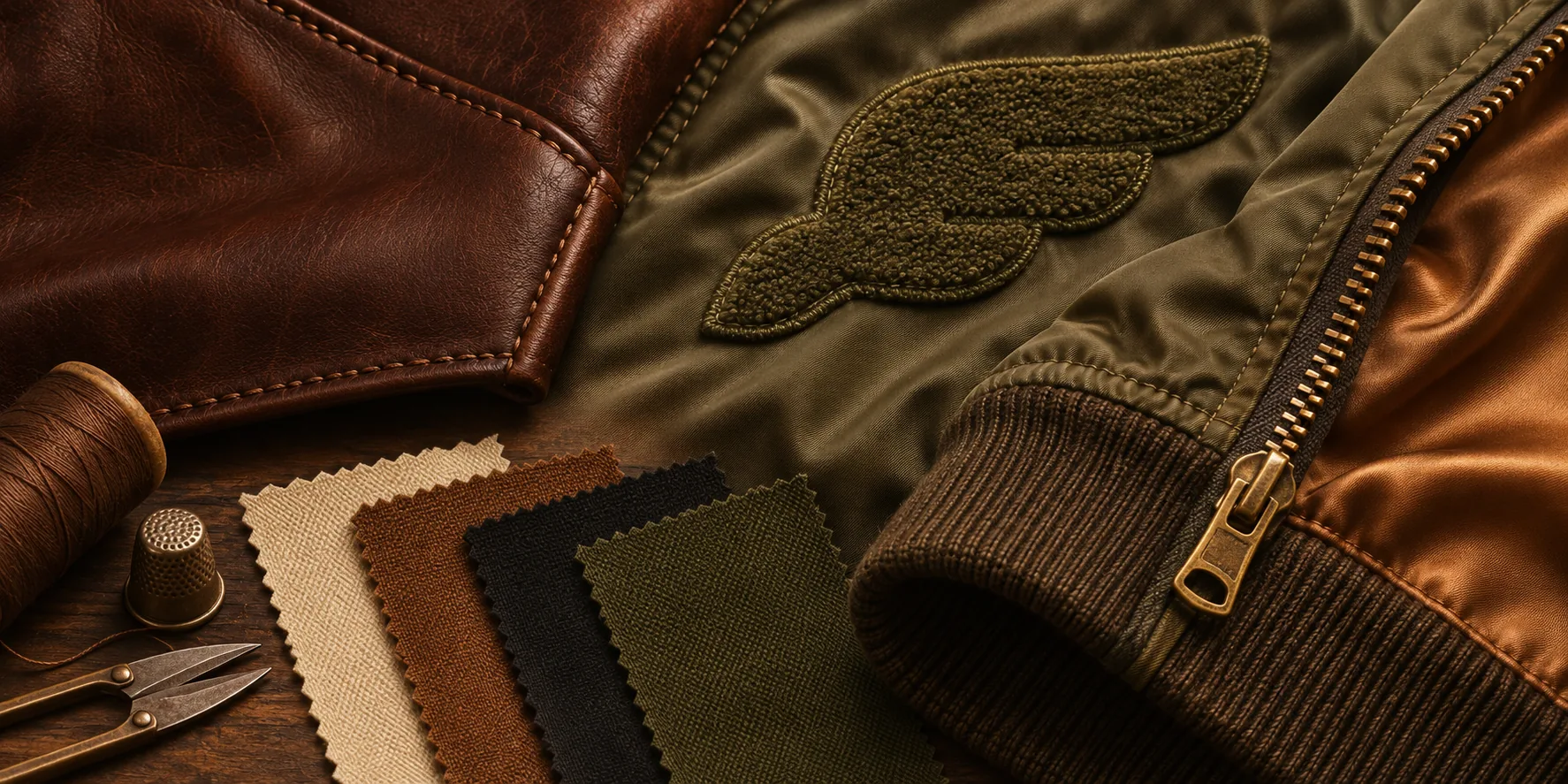
Because every Wisp Outdoor bomber jacket is decorated on flat cut panels before final garment assembly (true cut-and-sew manufacturing), your logos never suffer from hoop marks, crooked pocket placement, or sewn-shut interior pockets.
1. Precision Embroidery (ISO 105 Colorfastness Certified)
Whether executing subtle left-chest corporate wordmarks, sleeve callsigns, or 150,000-stitch full-back illustrations, thread chemistry determines longevity:
- 40-Weight (
135×2 dtex) Trilobal Polyester Thread: Featuring a prismatic Y-shaped cross-section, trilobal polyester replicates the liquid sheen of silk while delivering high tensile strength at 1,000+ stitches-per-minute speeds and superior ISO 105-C06 (wash/bleach) and ISO 105-B02 (UV lightfastness) ratings—preventing fading under harsh sun or repeated cleaning. - 3D Puff & Vintage Chain-Stitching: High-density EVA foam cores create raised 3D puff typography, while traditional moss/chain-stitch machines deliver textured heritage script on wool, denim, and leather shells.
2. Custom Patches & Tactile Appliqués
Mix and match dimensional emblems across chest, back, and shoulders:
- Chenille & Felt Varsity Patches: Thick yarn loops mounted on heavy felt backings for classic collegiate and streetwear depth.
- High-Definition Woven & Embroidered Badges: Merrowed or laser-cut borders capturing micro-text down to
1.5 mmheight, available sew-on or with military-spec hook-and-loop Velcro® backings. - Debossed Leather, Bullion Wire & 3D PVC/Silicone Emblems: Subtle blind-debossed full-grain leather tags for executive gifting, or weatherproof molded PVC badges for technical flight nylon jackets.
3. Cut-and-Sew Panel Printing & All-Over Prints
For gradients, fine line art, or repeating monograms, we offer pre-cut dye sublimation (locking ink permanently into polyester/satin fibers with zero hand-feel), high-opacity screen printing, and stretch-resilient Direct-to-Film (DTF) transfers tested against peel and crack cycles.
4. Custom Rib-Knit Trims, Zippers & Private-Label Hardware
- Yarn-Dyed Ribbing: Customize collar, cuff, and waistband knit patterns (solid, twin-tipped, or tri-color stripes) in cotton-spandex, wool-acrylic, or durable polyester blends engineered for elastic recovery.
- Heavy-Duty Closures: Specify #8 or #10 YKK® two-way metal zippers in antique brass, gunmetal, matte black, or polished nickel—complete with custom-molded logo zipper pulls, engraved snap buttons, custom woven neck labels, and retail barcode hangtags.
Crafted Under a Veteran’s Eye: Lessons from a 40-Year Aviation Heritage Partner
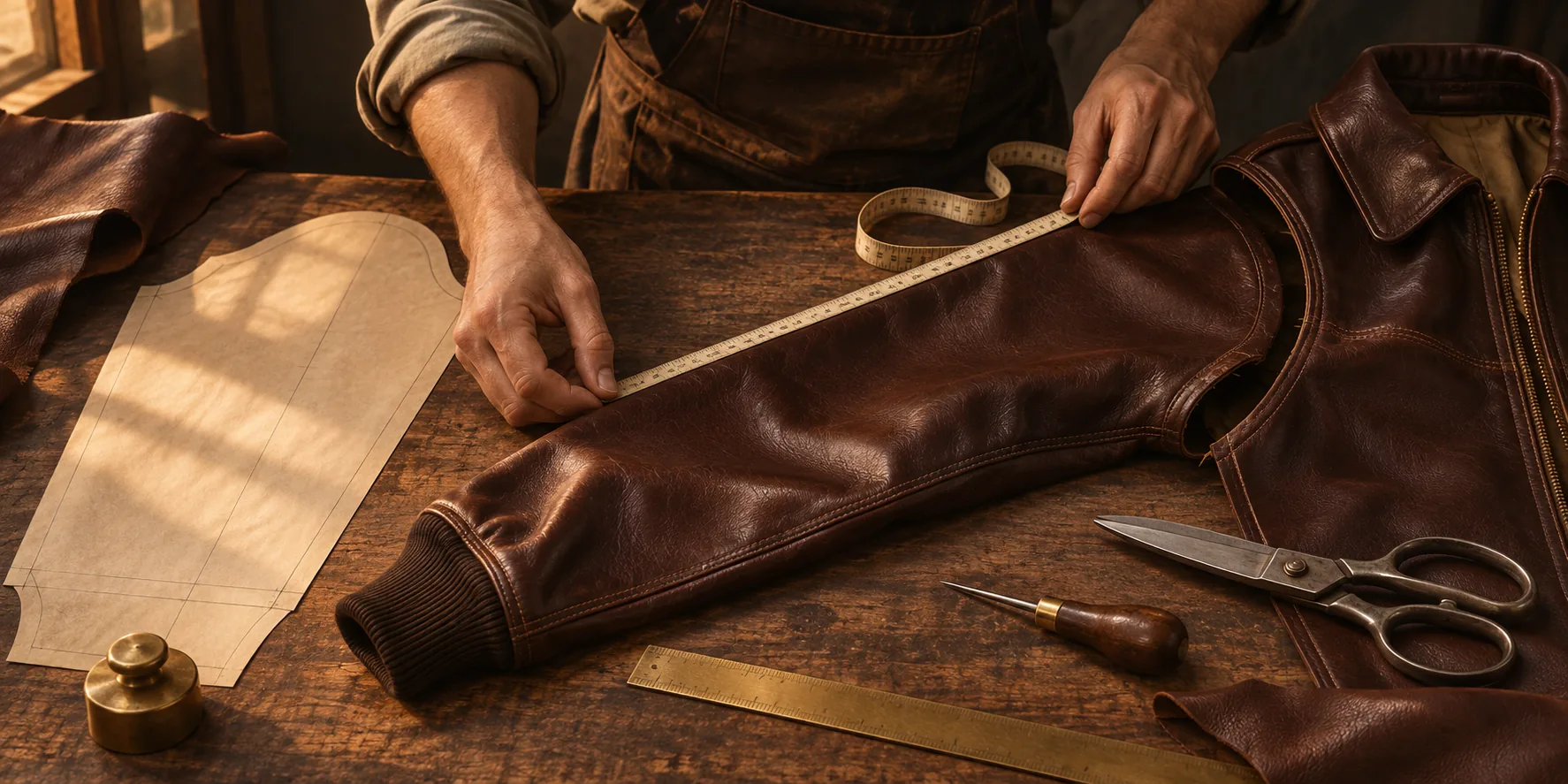
Anyone with a heat press can slap a logo onto a thin promotional windbreaker and call it a bomber jacket. Understanding what makes an authentic flight jacket survive thirty winters takes a very different teacher.
Years ago, our production team had the privilege of collaborating with the husband-and-wife founders of a quiet, family-operated flightwear institution tucked away in the American Midwest. The owner—a retired U.S. Army sergeant and former Coast Guard service member who earned a Purple Heart in Vietnam and spent a full year recovering in military hospital wards—had launched his outfitter with his spouse in 1986. Long before mainstream apparel brands trusted the early internet, they pioneered online aviation retail, eventually becoming an official supplier to Army, Naval, and Coast Guard flight communities, outfitting heads of state and iconic Hollywood adventure productions, and appearing on national broadcast television each autumn to honor veteran heritage.
Working with a founder who had lived inside government-issue gear changed how our workshop approaches every custom bomber jacket on our cutting tables today:
- Zero Tolerance for "Shortcut" Seams: Where mass-market factories split the back of an A-2 jacket into three cheap scrap panels to save leather yield, he insisted on unbroken, archival single-panel backs and functional G-1 bi-swing shoulder gussets—so a pilot reaching forward on cockpit controls (or an executive reaching for an overhead cabin bin) never feels the waist hem ride up.
- Respect for Hide & Fiber Integrity: A flight jacket isn't a costume; it is personal armor. Every hide lot had to exhibit tight, lanolin-rich grain resilience, every collar snap had to lock cleanly with one gloved hand, and every stitch line had to hold uniform tension (
8–10 stitches per inchon full-grain leather) without perforating or weakening the pelt. - Built to Carry a Story: Whether a jacket carried a squadron blood-chit lining, a commemorative unit patch, or a modern startup’s founding crest, it had to be built worthy of being handed down to the next generation.
Today, whether you are reviewing a personalized bomber jacket sample or ordering a 300-piece corporate run, your garment passes through the exact same pattern discipline and quartermaster-grade inspection philosophy.
Tailored Pathways: Individual Design Inquiries vs. B2B Bulk & Wholesale
Individual design
- Share a sketch, reference or logo
- Discuss sizing and sample feasibility
- Confirm the sample scope and costs
Wholesale & teams
- Share your quantity and target date
- Review the quote and approve the pre-production sample
- Confirm bulk production and delivery
Individual Bespoke Design Inquiries
You don’t need a tech pack or a fashion degree to start a design inquiry. Share a rough sketch, reference photo, or logo so we can review the design and advise whether sample development fits your project. A sample is part of development. The standard production minimum for apparel is 300 pieces.
Corporate, Event & Private-Label Wholesale (300-Piece Apparel Baseline)
Leading tech companies, beverage brands, motorsport teams, and independent streetwear labels rely on our B2B division to eliminate sourcing friction:
- Wholesale Quotation: Request custom bomber jackets wholesale pricing based on your quantity, materials and decoration. The standard apparel MOQ is
300 pieces. Confirm minimums by color and allocation in the quotation. - Physical Prototype Approval: Verify exact leather grain, fabric GSM, Pantone® thread accuracy, and fit on a physical sample before greenlighting bulk production.
- Recipient Sizing & Delivery Planning: Outfitting a distributed global team? Share your size breakdown, destinations and delivery needs in the inquiry so we can confirm the available logistics and packing options.
Our 6-Stage Bespoke Manufacturing Workflow
- Complimentary Design Brief & Material Consultation: Share your concept, target quantity, preferred shell fabric, and delivery timeline.
- Digital Tech Pack & Mockup Approval: Review front, back, sleeve, and interior lining CAD renders specifying exact stitch dimensions, Pantone®/Madeira® color codes, and hardware finishes. Agree the scope and timing of pre-production revisions during the quotation.
- Hide Selection & Mill-Direct Fabric Sourcing: Full-grain hides are hand-graded for uniform grain and thickness; technical nylons, satins, and wools are inspected for weight and color consistency.
- Precision CAD Pattern Cutting: Individual patterns are cut to graded retail blocks or your personal made-to-measure dimensions.
- Flat-Panel Decoration & Master Tailoring: Embroidery, appliqués, and prints are applied to flat panels before master tailors assemble the shell, insulation, rib-knit trims, and lining.
- Quartermaster-Grade Quality Assurance & Express Global Delivery: Modeled after the inspection checklist refined with our four-decade military flightwear clientele, every garment undergoes stitch-per-inch (
SPI) tension checks, bi-swing gusset mobility testing, 50-cycle YKK® zipper pulls, measurement-tolerance verification (±0.5 cm), and stray-thread finishing. While legacy custom clothiers often quote 12-week wait times, our current apparel planning baseline is 15 days for sampling and 30–45 days for bulk production. Confirm the schedule start date, material availability, and delivery timing in the quotation.
How to Measure for a Made-to-Measure Custom Bomber Jacket
A well-proportioned bomber jacket frames the shoulders crisply, allows effortless arm movement across the upper back, and tapers cleanly at the hip bone. If opting for custom sizing over standard XXS–4XL blocks, grab a flexible tailor’s tape and record five key body measurements:
- Chest Circumference: Measure horizontally around the fullest part of your chest under the arms, keeping the tape level and relaxed.
- Shoulder-to-Shoulder Width: Measure across the upper back from the outer edge of one acromion (shoulder bone) to the other.
- Sleeve Length: With your arm slightly bent, measure from the outer shoulder seam point down along the outside of the arm to the wrist bone.
- Natural Waist / Hip Seat: Measure around the waistline where you want the ribbed bottom hem to rest.
- Center Back Length: Measure vertically from the base of the neck (C7 vertebra) down to your desired hem point (typically right at the beltline for a classic MA-1/G-1 cut, or
1–1.5 inchesshorter for a cropped vintage fit).
Frequently Asked Questions (FAQ)
1. Do you offer custom bomber jackets with no minimum order?
Wisp Outdoor’s standard apparel production minimum is 300 pieces. If you are developing a design, you can send an inquiry about sampling and confirm feasibility, costs, and requirements before placing a production order.
2. Can I order custom embroidered bomber jackets for my company, team, or event?
Yes. We specialize in custom embroidered bomber jackets for corporate summits, employee milestone gifts, sports rosters, and tour crews. Using industrial 40-weight trilobal polyester threads tested to ISO 105 wash and UV colorfastness standards, we can combine company logos, sleeve patches, and individualized employee names on the same production run.
3. Do you provide custom bomber jackets wholesale pricing for businesses and clothing brands?
Yes. Request custom bomber jackets wholesale pricing with an apparel production baseline of 300 pieces. The quote depends on volume, materials, decoration, and OEM/private-label options such as custom woven neck labels, care tags, and branded packaging.
4. Which material is better: a custom leather bomber jacket or a custom nylon bomber jacket?
It depends on climate, budget, and intended wear. A custom leather bomber jacket in full-grain goatskin (MIL-J-7823 heritage spec) or lambskin offers heirloom longevity, windproof luxury, and high executive perceived value. A custom nylon bomber jacket in 210–260 GSM water-repellent Nylon 6,6 twill (MIL-J-8279 MA-1 spec) provides lightweight all-weather versatility, high Martindale abrasion resistance, and lower per-unit cost for bulk team orders.
5. Why does cupro or viscose lining feel better than standard polyester lining?
Standard polyester lining has a moisture regain of only 0.4%–0.8%, trapping sweat vapor and generating static electricity. Cupro (Bemberg™) and viscose have an 11.0%–12.5% moisture regain and low water-vapor resistance under ISO 11092 testing, wicking humidity away from your skin for breathable, static-free comfort.
6. Can you produce custom-printed or all-over print bomber jackets?
Yes. Because every garment is cut and sewn from raw fabric panels rather than printed onto finished blank jackets, we execute seamless all-over print bomber jackets on exterior satin, polyester, cotton twill, and hidden interior linings with zero white seam gaps.
7. Can I add custom chenille patches, Velcro flight badges, and branded zippers?
Yes. You can combine chenille varsity letters, merrowed embroidered patches, removable hook-and-loop Velcro® tactical badges, debossed leather tags, yarn-dyed striped ribbing, and custom-engraved YKK® metal hardware.
8. What size range do you support, and do you offer plus sizes?
Please include the size range and fit you need in your request. We confirm the grading, fit sample, and any made-to-measure pattern development needed for your apparel program in the project brief.
9. What is your turnaround time compared to traditional bespoke makers?
Wisp Outdoor’s apparel planning baseline is 15 days for sampling and 30–45 days for bulk production. The quote confirms material availability, color allocation, and when the schedule starts. Share any fixed event date so we can assess feasibility.
10. Can I see a sample before confirming a bulk order, and do you ship internationally?
Yes. We support physical pre-production samples for bulk apparel programs. Include your destination and delivery requirements so we can confirm available international shipping options in the quotation.
Start Designing Your Custom Bomber Jacket Today
Ready to craft an iconic piece engineered to outlast trends? Partner with Wisp Outdoor’s bespoke outerwear specialists for 1-on-1 design guidance, mill-grade materials, and precision tailoring—from sample development to a full production run.
Technical & Academic References
- Franke, N., Schreier, M., & Kaiser, U. (2010). The "I Designed It Myself" Effect in Mass Customization. Management Science, 56(1), 125–140.
- Mugge, R., Schoormans, J. P. L., & Schifferstein, H. N. J. (2009). Emotional bonding with personalised products. Journal of Engineering Design, 20(5), 467–476.
- Lamb, J. M., & Kallal, M. J. (1992). A Conceptual Framework for Apparel Design (FEA Consumer Needs Model). Clothing and Textiles Research Journal, 10(2), 42–47.
- U.S. Department of Defense Archival Specifications: MIL-J-8279 (Revisions A–F), Jacket, Flying, Man's Intermediate, MA-1; and MIL-J-7823 (Revisions A–E), Jacket, Flying, Man's Intermediate, Type G-1.
- International Organization for Standardization (ISO) Textile & Leather Protocols: ISO 3376 (Leather tensile strength), ISO 3377-2 (Leather tear load), ISO 11640 (Leather rub fastness), ISO 12947 (Martindale abrasion resistance), ISO 11092 (Thermal & water-vapor resistance / ), and ISO 105-C06 / B02 (Embroidery thread wash & UV colorfastness).
- Advertising Specialty Institute (ASI). Global Ad Impressions Study: Promotional Outerwear Impressions, Retention & CPI Benchmarks.
- Grand View Research. Decorated Apparel Market Size, Share & Trends Analysis Report (2024–2030) & Global Winter Wear Market Report.
- Coresight Research, McKinsey & Company, & Narvar. North American E-Commerce Apparel Return Rates, Sizing Drivers & Consumer Bracketing Studies.